The increased incidence of storms over the last few years has clearly highlighted the unreliability of mortar for securing roof tiles. Mortar eventually cracks; it’s just a matter of time. British Standards now state that no reliance should be placed on the shear strength of mortar used in filling and bedding. That’s why the switch to dry verge and dry ridge systems is gathering momentum every year.
Our dry roofing installation systems are mechanically fixed, with each unit individually screwed in place. The next unit interlocks, giving extra strength while hiding the screws. This offers maximum protection against strong winds and water penetration, long‑term protection with a neat, attractive appearance, and no ongoing mortar-related costs. We fit systems that outlast mortar by decades and meet current building regulations for roof ventilation.
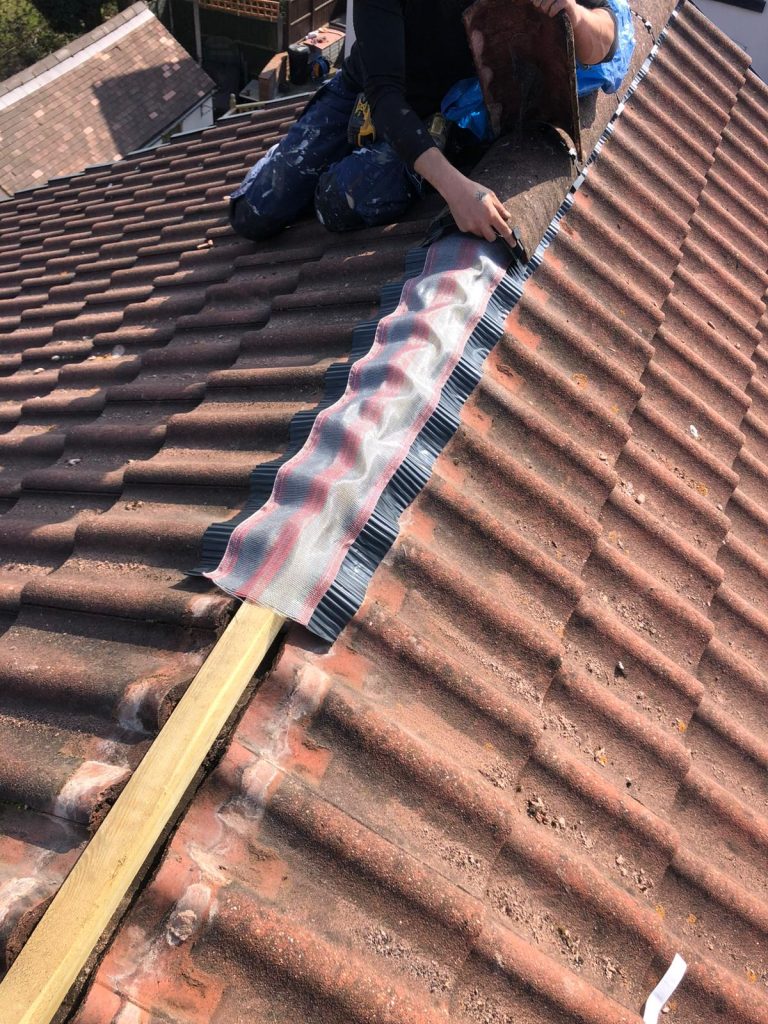
Dry ridge systems mechanically secure ridge tiles, allowing natural movement while preventing cracking and reducing maintenance compared to traditional mortar-based systems.
Dry verge systems protect the edges of your roof, preventing wind uplift and water ingress while improving the overall appearance and durability of your roofline.
Our systems strengthen vulnerable roof areas, reducing exposure to weather damage and helping maintain structural integrity over time.
Dry roofing allows airflow through the roof structure, reducing condensation build-up and helping protect the internal condition of your property.
Replacing old mortar systems with dry solutions reduces the need for ongoing repairs and eliminates common cracking and weather-related deterioration.
We install dry ridge and verge systems on new roofs and existing properties, ensuring compatibility with your current roof structure.

Tell us your verge or ridge is failing. We will arrange a visit, usually within a few days.

We inspect the roof, measure the verges or ridge length, and provide a fixed price quote. No obligation.

Pick a dry day, or we will work in light rain. Dry systems don’t need curing like mortar.

We fit the system, clear every scrap of old mortar debris, and leave your roofline looking smart. Then you forget about it for 20+ years.
A dry verge is a mortar‑free way of finishing the roof edge (the verge) where tiles meet the gable end of a house. Instead of traditional sand and cement, which cracks and needs repointing every few years, we fit interlocking UPVC or GRP units that clip over the tiles.
For a typical semi‑detached house in the West Midlands, dry-verge installation on both gable ends costs between £250 and £500 for supply and fit, depending on access and roof size. Full roofline jobs involving both verges and ridges cost more, but the long‑term saving is huge because you will never repoint again. The only way to know exactly is a site visit. We do those free, with no obligation.
Simple. The verge is the roof edge along the gable end, the sloping side of your house. A dry verge system replaces the mortar here with plastic or GRP units. The ridge is the very top peak of the roof, where the two slopes meet. A dry ridge system secures the ridge tiles with screws and clips and often includes built‑in ventilation to keep your loft dry. Many roofs benefit from having both done at the same time.
Traditional mortar naturally cracks over time due to weather exposure, roof movement, and temperature changes. Dry roofing systems are mechanically fixed and interlocked, providing stronger protection against wind uplift and water penetration while reducing long-term maintenance requirements.
Yes, and they are often required. For many new roofs and re‑roofing projects, building regulations now require ridge ventilation to prevent harmful condensation in the roof space. Dry ridge systems provide continuous ventilation naturally, usually with a 5mm air gap along the ridge. Many insurers also prefer dry‑fixed ridges over traditional mortar because they are less likely to blow off in high winds.
If your mortar verges or ridge tiles are cracking, becoming loose, or requiring frequent repairs, upgrading to a dry verge or dry ridge system may be the better long-term solution. Unlike traditional mortar bedding, dry roofing systems are mechanically fixed, helping improve durability, reduce maintenance, and provide better protection against wind and rain.
Upfront, a dry ridge system typically costs slightly more than traditional mortar. But over the long term, it’s cheaper because you never pay for repointing, repairs or call‑backs. Mortar needs checking and replacing every 5 to 10 years. A dry system lasts 20 to 30 years with no maintenance.
For a standard semi‑detached house, both gable ends can usually be converted from old mortar to new dry verge in a single day. A full dry ridge system (including removing old ridge tiles, fitting the kit and reinstalling the tiles) might take two days for a larger roof. Dry systems don’t need time for mortar to cure, so there’s no waiting around.